
When citizens become the guardians of the sky
Why isn't citizen air defense science fiction?


Imagine your phone rings. A voice on the other end says, "I see a drone above the building next door. It's heading toward the city center." Moments later, another call comes in — the same kind of report. Within minutes, the drone's full flight path is mapped out — without expensive radars or military satellites, but thanks to people simply looking up at the sky.
This isn't fiction. It's a story that has already happened — and continues to happen. In an era when a single drone costs as much as a used car but can destroy infrastructure worth millions, the question is no longer "if" ordinary citizens can help defend the skies — but "how quickly" we can activate such a system.
For Poland — a country just a few hundred kilometers from the Ukrainian front, where Russian drones have already violated our airspace — that question carries particular weight.
From history: citizens — the eyes and ears of air defense
Pearl Harbor changed everything
On December 7, 1941, the attack on Pearl Harbor showed Americans that their skies were not safe. The very next day, thousands of people spontaneously began scanning the skies for Japanese aircraft — from rooftops, hills, and beaches. It was initially chaotic, but the government quickly realized a simple truth: we have millions of eyes — let's use them wisely.


That's how the Ground Observer Corps was born — the first large-scale system of citizen air defense in U.S. history. By 1943, one and a half million civilians stood watch at fourteen thousand observation posts, each a small tower or hut equipped with a telephone, binoculars, and simple aircraft identification cards.
The system worked with elegant simplicity. Mrs. Murphy, a retired teacher from Maine, climbed the wooden steps of her two-story observation tower every morning at dawn. She carried her binoculars, a wall-mounted telephone, and a plastic chart of aircraft silhouettes. Whenever she heard an engine, she looked up at the sky and compared what she saw with the images on the card.
That day, she spotted an aircraft with an unfamiliar shape — not the American P-51 with its square wings, nor the British Spitfire with its graceful elliptical tips. She picked up the phone: "Observation post 247 reporting. Unknown aircraft, heading northeast, altitude about 3,000 feet, single-row engine."
At the filter center, an operator plotted the report on a map. Moments later, similar messages arrived from three other posts. Triangulation revealed the truth: a Japanese submarine had launched a reconnaissance plane. An alarm was raised for the entire coast.
The American genius lay in making air defense service socially appealing
The WEFT training system — Wings, Engine, Fuselage, Tail — was simple but effective. Board games, flashcards with aircraft silhouettes, and even movie theater contests were created. "Aircraft recognition bees" drew crowds like today's esports tournaments. People memorized the shapes of dozens of aircraft types, becoming true experts in identification.
1940: When the British Isles listened to the sky
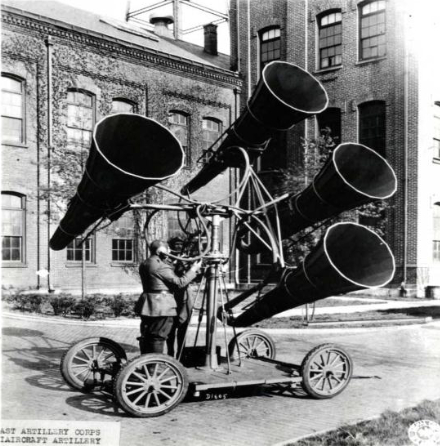
Before America learned to watch the skies, the British had already spent a year learning to listen. The Battle of Britain in 1940 was the first conflict in which the fate of a nation was decided by control of the air.
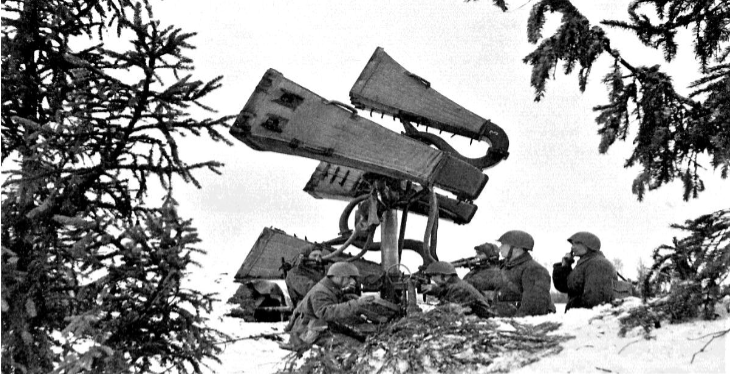
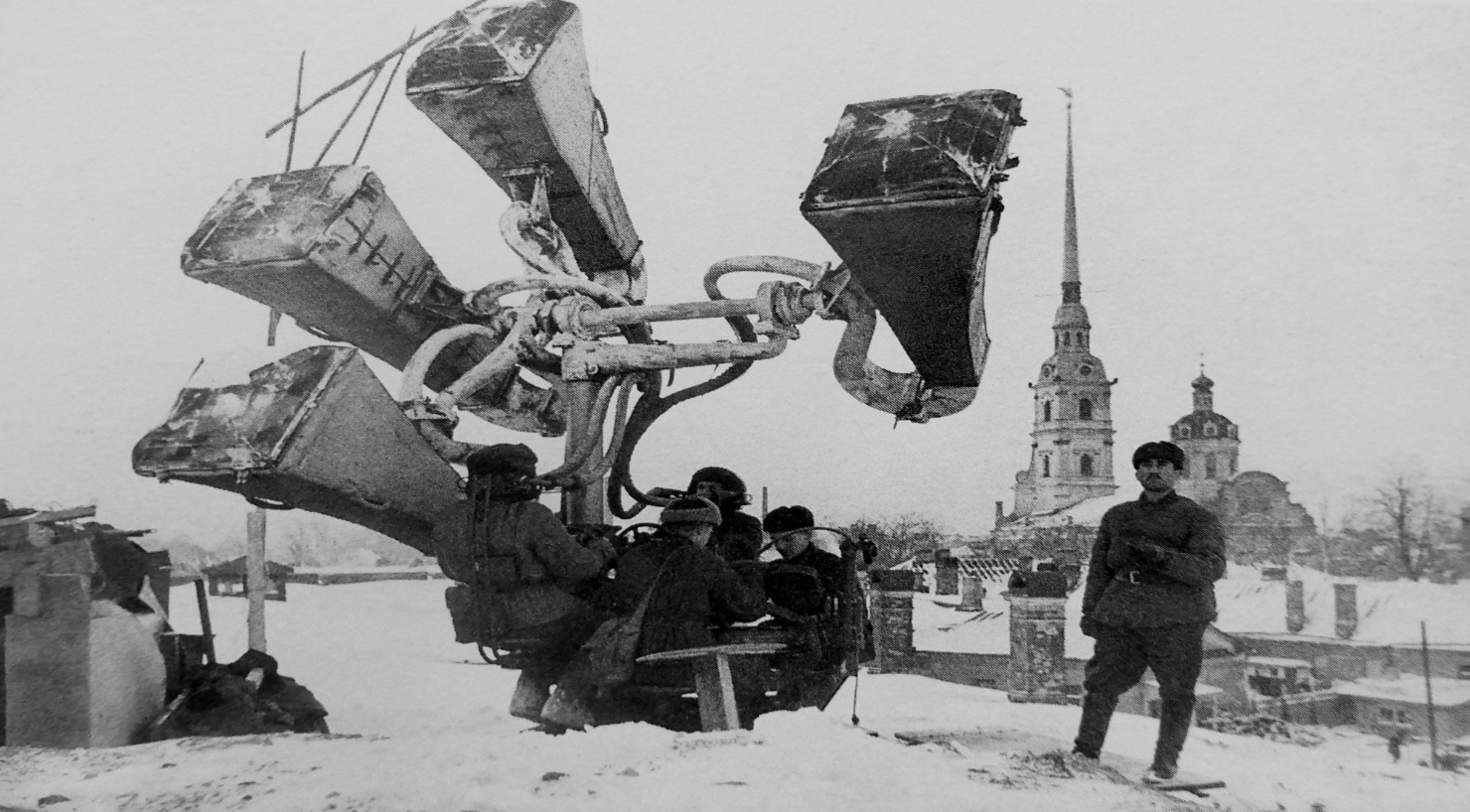
The RAF had an advantage — the Chain Home radar network, the world's first early warning system. However, the radars had weaknesses: They couldn't detect low-flying fighters and didn't provide precise information about the number or altitude of aircraft. Those gaps were filled by the Royal Observer Corps — an army of volunteer observers and listeners. Thousands of men and women stood on rooftops, towers, and open fields, equipped with binoculars, notebooks, and simple acoustic devices — giant tubes and so-called "mirror sound locators" that amplified the sound of aircraft engines. Their reports were sent to RAF command centers, where they supplemented radar data.

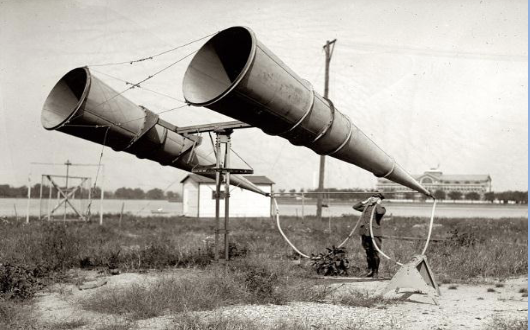
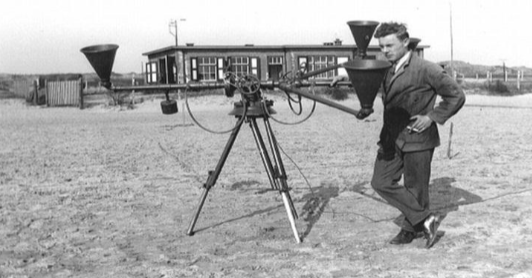
After the war, Winston Churchill said that the Royal Observer Corps was "the eyes and ears of the British Isles." Thanks to them, Britain's air defense could operate effectively despite its limited number of aircraft.
The Cold War: System 2.0
In 1950, the United States faced a new adversary — the Soviet Union. America turned to a proven model, but in an upgraded version. The new Ground Observer Corps involved 210,000 volunteers across 8,000 observation posts.
This time, the traditional "eye" was combined with modern procedures — observers received gauges for estimating altitude and detailed identification instructions. The system complemented radar coverage wherever it failed — especially at low altitudes and in terrain shadows.
The key lesson was clear: citizen air defense didn't replace professional systems — it filled their gaps.
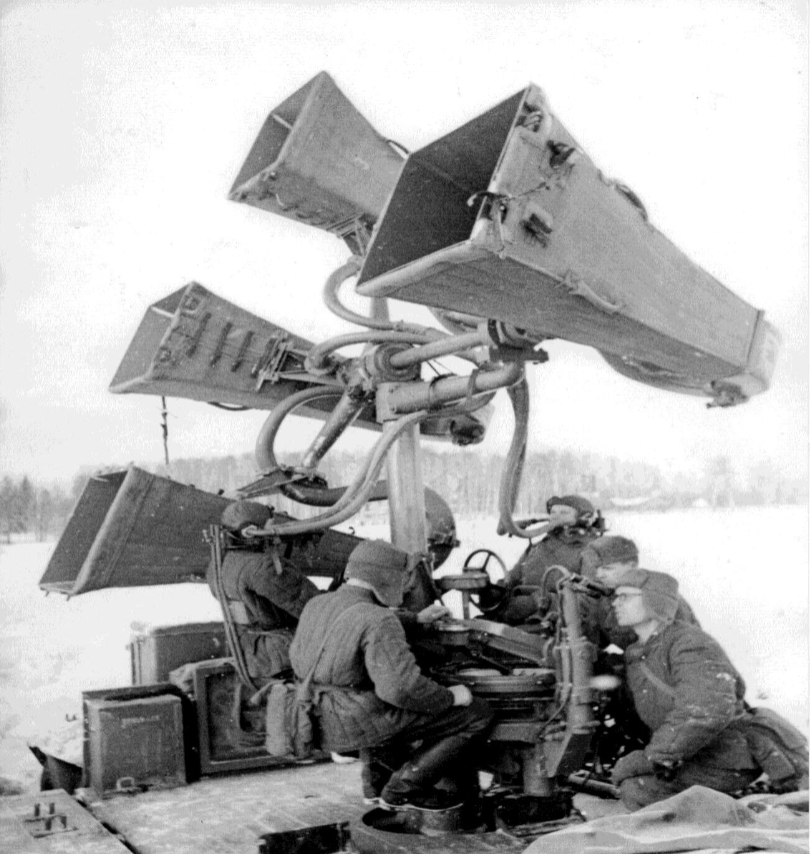
Ukraine 2022: A revolution in the smartphone era
When the phone became a weapon
The shift from the analog past to digital reality became clear only during the war in Ukraine. On February 24, 2022, when the first Russian missiles struck Ukrainian cities, the country already had modern radars and S-300 defense systems. However, the challenge was different: the Russians possessed far more missiles and drones than Ukraine had air defenses. The solution came from the most unexpected direction — from ordinary people with phones in their pockets.
The "єППО" app revolutionized civilian observation. Victor from Kyiv hears the distinctive buzz of a Shahed drone — a low, rhythmic hum, like an old motorcycle idling… a sound straight out of the 1930s. He opens the app, taps "drone," and his GPS location is automatically transmitted. The system cross-checks his report with other sightings nearby.
In the command center, an operator sees fifteen drone reports coming from the same direction within five minutes. It's no coincidence — it's an air raid. Warning zones are marked, air defense systems are activated, and the response time drops from hours to minutes.
The Microphone Revolution
At the same time, acoustic networks emerged — projects like SkyFortress, FENEK, and others deployed tens of thousands of low-cost microphones on rooftops and balconies. Shahed drones have a distinctive "sound signature" — specific frequencies that can be detected from several kilometers away.
The network of microphones functions like a giant ear for the city. As a drone flies overhead, successive microphones pick up its signal, and a computer calculates its position and trajectory. It's an "acoustic umbrella" spread over Ukrainian cities.
Deregulation as a Strategic Weapon
The most important innovation, however, was regulatory. Ukraine introduced large-scale deregulation of defense innovation. Testing a new drone? Just fill out an online form instead of waiting a year for certification. Have an idea for a missile detection sensor? Field-testing approval could come within two weeks.
This wave of citizen-driven innovation produced spectacular results. The Ukrainian company Firepoint developed Flamingo cruise missiles that surpassed the American Tomahawk in every key parameter. Flamingo's range is 3,000 kilometers, compared to the Tomahawk's 2,500; its warhead is more than twice as heavy, and its production cost up to twenty times lower. In addition, the Ukrainian missile demonstrates greater resistance to electronic jamming.
This was no coincidence — it was the result of a system where citizens not only detect threats but also design the weapons of the future. In just two years, Ukraine built a hybrid ecosystem in which state-operated S-300 missiles work symbiotically with smartphone apps, while civilian data feeds directly into professional command centers.
An Arsenal in Every Pocket
Sounds complicated? In reality, most of these technologies are surprisingly simple and accessible. What once required a university laboratory just ten years ago now fits inside a smartphone — or can be bought at an electronics store for less than the price of a good phone.
A modern microphone is a device that radically outperforms the human ear. For just a few hundred złoty, you can buy a directional microphone capable of detecting a drone farther away than you can see. Add a computer — even a Raspberry Pi costing about the same — and dedicated sound analysis software.
Every drone has a unique acoustic fingerprint. The frequency of propeller rotation and the character of its engine create distinct signatures that software can learn to recognize. Algorithms can distinguish a drone from an airplane, a helicopter, or a motorcycle outside your window. The system is inexpensive, works at night, and cannot be jammed electronically.
A camera combined with the right software becomes a vigilant guardian of the sky. Modern 4K cameras can spot details from several kilometers away, thermal imaging detects engine heat, and tracking software automatically follows moving objects.
The real magic begins with machine learning algorithms. A system trained on thousands of images can distinguish a bird from a drone, or a passenger plane from a military helicopter. It's like having an experienced air observer who never blinks and never needs a break.
Software Defined Radio (SDR) is a receiver that opens access to a wide range of the radio spectrum. Most drones communicate with their operators via radio links, transmitting video and sending telemetry — all of which can be monitored passively. The keyword is "passively." You're like an electronic ninja — no one knows you're listening because you're not emitting anything yourself. You can detect control links, video transmissions, GPS, and navigation signals.
Starting in 2024, every legal drone in the EU weighing more than 250 grams must transmit a Remote ID — a digital "license plate." The data packet includes the operator's unique identifier (from the ULC/EASA registry), the drone's current position, altitude, speed, and the operator's location — either the launch point or the controller's position. The signal is broadcast via Wi-Fi or Bluetooth Low Energy and can be received by dedicated receivers or smartphone apps.
When linked to aviation databases, the system instantly distinguishes between registered and unregistered flights. It's like having access to a vehicle registry — but for everything that flies.
The most advanced technique uses existing signals — FM radio, television, and cellular networks. When a drone passes through one of these signal beams, it reflects a portion of the energy. Special receivers capture those reflections and calculate the object's position. Passive radar has its own kind of superpower — it cannot be detected, is hard to jam, and fills in the "blind spots" of traditional systems. It's like turning an entire city into a vast, invisible radar.
Why It's Better Than Traditional Radars
The problem with classical systems
A traditional radar is like a flashlight in the dark — visible from afar. It emits powerful signals that can be detected from hundreds of kilometers away. The enemy knows exactly where the station is and can attack or jam it. Additionally, the curvature of the Earth, urban structures, and the small size of drones create numerous limitations.
The Power of a Distributed Network
A citizen system works like thousands of small, quiet sensors. One radar costs millions and is easy to destroy. A thousand sensors at a few hundred złoty each? Impossible to neutralize them all at once. It's the swarm effect — a single ant is nothing, but a thousand ants can defeat an elephant. One sensor can be wrong; a thousand sensors give an accurate picture of the situation. Where small drones fly — up to a few hundred meters — distributed ground sensors have the perfect vantage point.
Limits and Possibilities
What's Legal
Listening to radio signals in public frequency bands, visual observation from public areas, ambient sound analysis, and receiving Remote ID — an open signal intended for public access — are all legal activities. The boundary is clear: you can detect, observe, and report. You cannot interfere, disable, or attack.
Citizen air defense ends with reporting information — neutralization is left to professionals. A well-designed system also protects privacy: an acoustic sensor analyzes sounds locally and sends only the classification "drone detected" rather than raw recordings.
How to Connect It All into One System
Imagine an application that brings all these technologies together. A map displays detected objects and their status. If a drone transmits a Remote ID and its flight is registered in the PAŻP/U-Space database, it's marked as legal. If not, the app issues an alert and forwards the report to the system.
It's a radar in every pocket. Thousands of sensors on rooftops and balconies form an invisible network. Microphones, cameras, Remote ID receivers, and spectrum analysis systems — each element is small, inexpensive, and replaceable. Together, they're more powerful than the most expensive radar.
Central systems collect data, verify reports, filter out false alarms, and relay warnings to the authorities. At the end of the chain, the military decides on neutralization. Citizens provide the eyes and ears — professionals provide the firepower.
We Know It Works: From Flightradar to Airly
Flightradar — a citizen's map of the sky
The first proof that ordinary people can collectively create a global airspace monitoring system is Flightradar24. It's a platform built by thousands of volunteers who installed ADS-B antennas and receivers in their homes. Every civilian aircraft broadcasts its position, speed, and altitude — and data from thousands of such antennas feed into a shared online map.
The result? The largest citizen air-traffic monitoring network in history, available to anyone in real time. Flightradar24 started in Sweden as a hobby project of two enthusiasts, and today it is a standard tool for pilots, journalists and ordinary users who follow the flights overhead. It is proof that global crowdsourcing can replace solutions that were once the domain of states and agencies.
Airly — an air quality success story
A similar story happened in Poland. The company Airly proved that citizen sensor networks can change an entire country's approach to environmental monitoring. From a handful of smog sensors in Kraków, the project grew to thousands of points in Poland and across Europe.
The secret of its success was simple: cheap sensors, easy installation and a phone app. People mounted sensors on balconies and roofs, and the data went to a shared air quality map. City authorities — initially skeptical — eventually began using this data in environmental policy. Today Airly is one of the key sources of air quality information in the region.
Janosik — crowdsourcing in practice
The third example is the Janosik app, used by millions of drivers in Poland. Users report the locations of police patrols and road incidents, creating a real-time citizen warning system. The model is identical to defense systems: the data is collected by the community, cross-verified, and the result is available to everyone. It's pure crowdsourcing that has worked reliably for years.
From idea to system
Flightradar, Airly, and Janosik show that Poles – and the global community – can build distributed, large-scale networks based on citizen sensors and apps. The mechanism is always the same: cheap technology + social motivation + a central database. If we can track aircraft over the Atlantic, monitor air quality in Kraków, and flag police checkpoints near Pcim, we figured we could try monitoring the skies over Poland for drones too.
We decided to put that idea into practice and launched a crowdfunding campaign to build Poland's first citizen-based drone detection network. We received support from people who shared this vision, though not at a scale that would have let us build such a network from the ground up. Still, it was an important signal: people genuinely care about this issue.
We quickly realized, though, that the scale of the challenge – protecting national borders, critical infrastructure, military installations – requires something more than a crowdfunded grassroots initiative. It requires a systematic, certified solution built with real-world deployment in mind, not just one that proves a point.
Fortunately, we weren't alone in reaching that conclusion. Around the same time, faced with growing threats from the east, Poland saw a wave of new initiatives supporting the development of domestic C-UAS technology – acoustic detection trials at the Ustka test range, the inauguration of Poligon Innowatora, the Center for Autonomous Systems (OSA), and many other programs genuinely helping teams like ours grow. The professionalization of drone detection in Poland stopped being just our own conclusion – it became the direction the entire ecosystem was heading in.
We have also started a project co-funded by the National Centre for Research and Development (NCBR) under the European Funds for a Modern Economy (FENG) programme, which will help us take the solution much further than crowdfunding ever could. We already have Jeżyk field-tested at a military range, along with an early version of Żółwik – a compact detector designed for dense, distributed sensor networks.
The solution applies both on the military side – protecting facilities, borders, and critical infrastructure – and on the civilian side. Jeżyk is built for places where a failure or an attack means real damage: water utilities, power plants, fuel terminals and storage facilities – sites where discreet, passive detection matters most. Żółwik, thanks to its low cost and compact size, opens up the possibility of mass deployment on street lighting – a dense listening network across an entire city, with no need for dedicated infrastructure. That same sound-classification capability also opens the door to civilian applications beyond drone detection – for example, detecting birds over farmland.
Time Is Running Out
In a world where a single drone can shut down an airport, and a swarm can strike critical infrastructure, every minute of detection lead time matters. For Poland, sitting within reach of conflicts to the east, this is an especially pressing challenge.
Traditional defense systems are expensive and have their limits. A dense, distributed network of passive detection is a way to meaningfully improve security at a fraction of the cost of classic solutions. History shows a pattern: from American binoculars, through Ukrainian smartphones, to what's now possible in Poland. The idea stays the same – it's just that today, instead of aircraft silhouette cards, we have artificial intelligence.
The question is no longer whether this is possible – we know it is, and we're already building it. The question is how quickly we can scale it before it's genuinely needed.
This article is an invitation to talk – to anyone with ideas for developing this further, to anyone who could help us field-test the solution and collect acoustic drone data (which matters to us just as much as funding), and to companies and institutions interested in deployment. Get in touch with us.